
Sadly, the lube applied to my intimate area was not recreational but medical.
Following numbness, blood, a phone call, I found myself sporting a knee-high backless number, cheeks sticking to a vinyl seat, and queuing along a corridor at the local hospital instead of registering my form before their morning lessons. Unexpected physical contact is stress enough (dinner at a friend’s house—shoes off, tablecloth to the floor and two playful kittens lurking beneath, intent on re-enacting the opening scene of Jaws—took me close to a coronary). So, physical contact was preying on my mind as I awaited the scan—and I’d yet to learn about the lube. Weeks earlier, cooing and ahhhing, I’d watched ghost images of my unborn daughter on the much same equipment. How times change.
A strength of Keith Chandler’s The Goldsmith’s Apprentice is its structure. In ‘Ultrasound (20 weeks)’ we’re in the maternity unit but, for Chandler’s speaker, the scan’s audio and visuals are troubling. The foetus has a ‘heart darkly pumping’, a ‘Mekon skull’ and shines ‘as if radioactive’. In the final stanza, Chandler is reminded of ‘bones I saw once / at the bottom of a pit / in Orkney, under a stone cist’. Perhaps Chandler is invoking Beckett’s Waiting for Godot: ‘Astride of a grave and a difficult birth. Down in the hole, lingeringly, the grave digger puts on the forceps. We have time to grow old. The air is full of our cries.’ But perhaps we can take heart from the human chain that connects us to our 5,000 year old brothers and sisters on Orkney. Towards the end collection, ‘Ultrasound (70 years)’ puts us back in the consulting room and the speaker sees ‘Three polyps (luckily benign) / cluster like molluscs on the rock of a kidney / while heaped in the distance / the mud banks of my upper intestine.’ Alluvial deposits are the nature of things. Rivers, once mighty arteries, silt-up and choke. To dredge them is to fight time.

These ideas play out across the collection. ‘Coalport Girls’ presents talent and tragedy: ‘Who like you / could magic up, plate after plate, / the fuzz of peach, the frosty glow of grapes? Or put a tear drop on the peony’s cheek / fresh as your own / wet from the fields of Shropshire or East Wales?’ The repetition of ‘plate after plate’ reminds me of John Ruskin’s The Stones of Venice:
Never encourage the manufacture of anything not necessary, in the production of which invention has no share.
For instance. Glass beads are utterly unnecessary, and there is no design or thought employed in their manufacture. They are formed by first drawing out the glass into rods; these rods are chopped up into fragments of the size of beads by the human hand, and the fragments are then rounded in the furnace. The men who chop up the rods sit at their work all day, their hands vibrating with a perpetual and exquisitely timed palsy, and the beads dropping beneath their vibration like hail. Neither they, nor the men who draw out the rods or fuse the fragments, have the smallest occasion for the use of any single human faculty; and every young lady, therefore, who buys glass beads is engaged in the slave-trade, and in a much more cruel one than that which we have so long been endeavouring to put down.
There’s an uncomfortable disconnection between Coalport’s idealised images and the manner of their production, the girls ‘seated at trestles, piecework piled high / behind, in front, like tower blocks’. Also, at first reading, I distanced myself from these pitiful conditions, presuming that Chandler presents a nineteenth century hell. However, the girls’ own ‘frosty glow’ was snatched from them as a landslip ‘spilled casually downhill toward the Severn’, leaving them ‘dull as the slipware before it is ghost fired. This happened in Jackfield, Shropshire, in 1952 and images of the exhumed houses, uncovered in 2014, make for uncomfortable viewing.

The title poem, ‘The Goldsmith’s Apprentice’, treads similar ground as the young apprentice, listening to the rules on day one, hears his death sentence: ‘You will breathe this atmosphere of dust / and soft percussion, dying at last / stoop backed, purblind, / your lungs lit up like a golden branch.’ ‘At last’ perhaps implies that the goldsmith will be waiting to extract the apprentice’s lungs to reclaim his gold in the same way that he has been periodically burning his ‘shoes, clothes, snot, sawdust’ to recycle every spec of gold expectorated. Or perhaps the apprentice, once he is the a husk of a man, will long for a merciful release.
Chandler’s portraits of working men and women transcend oppression and celebrate the workers’ skill and spirit. ‘Chemo Nurse’ sings with authenticity, recreating the banter of a brilliant bedside manner. The first five stanzas comprise a single breathless sentence. It’s only as the speaker pauses to reflect that we are permitted to draw breath. The poem reprises the nurse’s magic trick, plated up again and again.
There’s a tremendous amount going on within the collection’s 67 pages. ‘The Executioner’s Tale’, based on the account of a Filipino policeman, reads like the unflinching reportage of Dan O’Brien and lends a haunting, troubling humanity to the hardest of jobs while poems like ‘Skipping’ recollect the simplest pleasures with exquisite, painful nostalgia.
>> Buy The Goldsmith’s Apprentice from hive.co.uk >>
RELATED LINKS


 Rachael Boast’s Void Studies was the first up and this was a poetry collection on the edge. Its language reinscribes words with power in a fabulous dreamscape of memory and desire as it invokes – reincarnates – Arthur Rimbaud. The poems’ relationships with one another are like the facets of a precious stone – individually beautiful but, together, they reflect and refract ideas and sounds into a spectrum of pure colour. This collection was jaw-droppingly inspiring and a great start to my ten weeks of reading.
 Next up was Vahni Capildeo’s Measures of Expatriation. As I wrote for the T.S. Eliot Foundation newsletter, this collection opens with an epigraph from the Old English poem, ‘The Seafarer’, (‘Blessed is he who lives humbly’) and ‘helps us to measure language and ideas against a thousand years of invasion, immigration and imperialism’. With a resurgence of nationalism, protectionism, introversion and a general fear of the other, Capildeo’s poetry feels important and timely.
 Wit, wisdom and social engagement flow from Ian Duhig‘s Twitter account – @IanDuhig. Take this recent Tweet: ‘The Importance of Being Earnest.docx. A play on Word’. His nominated collection, The Blind Roadmaker, is filled with his trademark wit and his sheer joy in language. However, it also engages with social justice and historical revisionism through figures like Blind Jack Metcalf, a Renaissance Man of the late 1700s / early 1800s. As I wrote for the T.S. Eliot Foundation, ‘Duhig validates his subjects through cross-cultural comparisons, describing Metcalf as ‘our Daedalus of roads”. If culture is our collective memory, then Duhig’s collection is a political act: inviting society to remember a different set of figures and to spend a little less time revering the cold bronze imperialists typically memorialised by the nation. Duhig invites a humbler, more humane memory of ourselves.
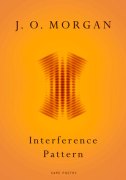 J.O. Morgan’s Interference Pattern was a revelation. As I explained in my T.S. Eliot Foundation piece, the collection ‘offers vivid physical experience, offset by oblique, figurative responses’. The collection sets quasi-Homeric similes against a set of dramatic monologues – it sets the physical against the transcendental and watches as the sparks fly. Like Boast’s, Morgan’s poems gain mass and gravitas from the others around them and this book adds up to more than a poetry collection – it’s a single entity… a work of art.
 I’ve been reading Bernard O’Donoghue my entire adult life. At uni, the rest of my year group wisely decided to take a course with him… and fell in love in an afternoon. He’s a generous optimist, once putting his hand in his pocket to help a friend of mine to launch a literary magazine that lasted 2 issues. Like Duhig, O’Donoghue tends the flame of a more humane humanity. In The Seasons of Cullen Church there’s no ‘project’ like Morgan’s or Boast’s, but there’s a mastery of craft like no other.
 Alice Oswald’s Dart reinvigorated my faith and excitement in contemporary poetry and Falling Awake, winner of the Costa Poetry Award, is yet another superb collection from an exciting poet. The stand out poem is ‘Tithonius’. A graduated line – time? – threads through its backbone and it retains Dart’s distinctive sense of journey through landscape and time. Oswald’s deep engagement with Classical literature helps her to convey timelessness through the perpetual repetition of actions as the planet spins through space.
 In Jackself, Jacob Polley creates an eponymous, quasi-mythic character and mythologises his native Cumbria. His title is wrested from one of Gerard Manley Hopkins’s terrible sonnets of spiritual and existential crisis (‘My Own Heart’) and, combined with an epigram from the anonymous ‘Tom o’Bedlam’, promises a deep engagement with folktales as it wanders through a midnight world.
 If Polley’s intimate engagement with landscape reminded me of Thomas Hardy, Denise Riley’s haunted Say Something Back reminded me of Hardy’s Poems 1912 – 13, his haunted, passionate response to the death of his first wife, Emma Gifford. Riley’s speaker seeks consolation in poetry: ‘I can’t get sold on reincarnating you / As those bloody ‘gentle showers of rain” – mocking the poeticisms of the past like a twenty-first century Ezra Pound – ‘oooh / Anodyne’. The collection’s engagement with grief in a godless world is stark, uncomfortable and authentic. Wordsworth, eat your heart out as ‘Peanuts in caramelised burnt chocolate bake / Through syrupy air’ underneath Riley’s Westminster Bridge.
 Ruby Robinson‘s Every Little Sound opens with a summary of the concept of ‘internal gain’: ‘an internal volume control which helps to amplify and focus upon quiet sounds in times of threat, danger, or intense concentration’. The result is a set of hyperreal observations, transcending the everyday and unlocking its latent Gothic menace.
 Finally, Katharine Towers‘ The Remedies is unlike the other shortlisted collections: there’s a purity, a gentleness, a stillness which serves as a foil for the political and social engagement in some of the others. However, perhaps there is a form of social engagement here – stillness and silence are premium products, luxuries, in a world overloaded with the white noise of information and demands for action. Towers offers us a salve. Simplicity and beauty are endowed with the power of an essential oil in this collection.