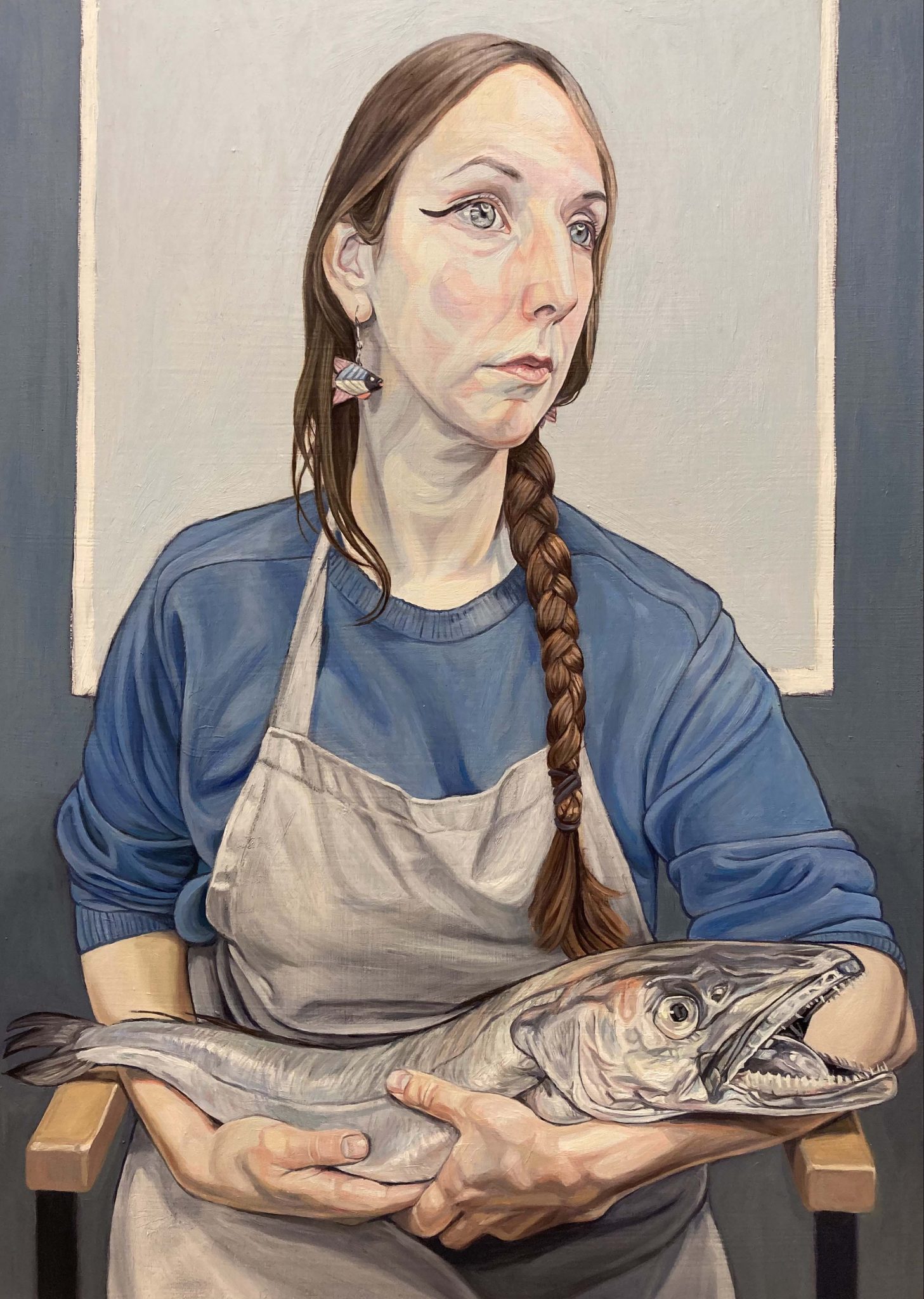
World in Motion—Matthew Stewart’s ‘Whatever you do, just don’t’

I was lent a copy of Eduardo Galeano’s Football in Sun and Shadow by a friend. She attempted to convey its profundity but I accepted it only out of politeness. It entered my library as one of those books I never intended to steal, but knew that I was probably never returning. These thefts chew away at my karma but are, somehow, less disgraceful than returning a book unread. But then I became ill and, faced with the prospect of an entire term stuck in a flat, I decided to assuage my conscience by reading and returning a few of the books that reproached me from the shelves. 

Although Football in Sun and Shadow is the only book I have read on the beautiful game, I believe that, had I read hundreds, this one might still be the greatest. Structured as a series of vignettes, it presents a seemingly random series of individuals and events but, as it builds, its rhythms and themes snap into focus: footballers, like mayflies, enjoy their season in the sun but, having astonished the crowd with their skill, oblivion beckons. Here’s Galeano on Uruguay’s 1924 Olympic team:

‘The sky-blue shirt was proof of the existence of the nation: Uruguay was not a mistake. Soccer pulled this tiny country out of the shadows of universal anonymity.

‘The authors of those miracles of ’24 and ’28 were workers and wanderers who got nothing from soccer but the pleasure of playing. Pedro Arispe was a meat-packer. José Nasazzi cut marble. “Percho” Petrone worked for a grocer. Pedro Cea sold ice. José Leandro Andrade was a carnival musician and bootblack. They were all twenty years old, more or less, though in the pictures they look like senior citizens. They cured their wounds with salt water, vinegar plasters and a few glasses of wine. 

‘In 1924 they arrived in Europe in third class steerage and then travelled on borrowed money in second-class carriages, sleeping on wooden benches and playing game after game in exchange for room and board. Before the Paris Olympics, they played nine games in Spain and won all of them.’

On the 9th June, 1924, Uruguay took gold, with The Times describing those bootblacks and grocers as ‘a sound, all-round side with a fast, clever forward line which combines beautifully. The half-backs are admirable both in attack and defence, and the backs are very reliable. There is not doubt they are a really fine amateur side.’

Matthew Stewart’s second collection, Whatever you do, just don’t, offers its own meditation on sun and shadow. Small observations on living between Spain and the UK, family life and, of course, the beautiful game, might seem unrelated but, as the collection unfolds, these elements pull together as a bitter-sweet meditation on love and loss. 

A memorable sequence is ‘Starting Eleven’, a series of portraits of Aldershot FC footballers from the 1980s. Fate and fortune are writ large in these poems. The opener, ‘Tony Lange’, mines the irony of sporting euphemisms as the player is ‘Released by Charlton at twenty’ as if he were a big cat in captivity. This is picked up again a few lines later as Lange ‘prowls our goalmouth’… ‘waiting / to pounce’. It’s a reminder of the steepness of the pyramid. Lange’s no apex predator but, playing at Aldershot, he looks like one. In ‘Dale Banton’, the footballer’s career lasts 3 fleeting quintains” The first season I went, / he scored hat-tricks for fun’ but ‘Now—six long years later— / he’s back, signed by the Board / to silence our protests— / though the manager knows / full well his legs have gone’. Six years — a lifetime in football — it reminds me of a character like Stanhope in R.C. Sherrif’s Journey’s End, who’s lived a lifetime in the trenches in three years. The poem’s present tense serves as yet another frame between the reader and Banton, tinting him with sepia. Despite this, the fans’ blind loyalty and the Board’s sense of duty are a heart-breaking nod to a classier kind of sportsmanship.

‘Starting Eleven’ links smoothly to the wider collection. Take ‘Our Ball’, a poem in which the football itself stands as the metaphor for a father / son relationship:’ our ball’s lived for well over a decade / under a rug in the boot of my car. / Loading the stuff you’re taking to Uni, / I spot its faded yellow hexagons’. It’s relegated to the past but, for a fleeting moment, it exists once again in the present tense: ‘and now you crouch as if ready to dive, / your grin escaping, playful, complicit, / till you straighten, remind me of the time, / and stow our ball again’. It’s so carefully executed. The father becomes the child, as the son, freshly graduated to the world of common sense, is the one to put away childish things.

Stewart’s work as blender and exporter of Zaleo wines gives him a unique perspective on Brexit and the UK’s relationship with Europe. In ‘Carnet de Conducir’ (Driving Licence) he opens with a regular line of verse: ‘The time I handed my UK licence’ but then the poem is riven apart:

To Spanish civil servants

                                              my balance

tilted and swayed—

                                      I had to make a grab

for the counter.

‘Foreigner’, one of the collection’s final poems, uses its title to invite UK readers to fill the void with the ‘other’ of their choice before problematising such labels. Stewart opens: ‘My accent still reeks of Surrey, / so you’ll assume I’m British’ before contrasting this with the speaker’s Hispanic mannerisms in the second stanza’s ‘lift of my eyebrow, / rise in my tone at the end / of words’. ‘Warning’ offers the reader firm instructions: ‘Just don’t raise your voice if speaking / Spanish while on a bus or train’. Perhaps it’s too much to link this to one of the collection’s early poems exploring Stewart’s life in Spain, ‘Translator, Traitor’, but with the rise of The Right across the world, it’s something we cannot afford to forget: ‘La Guerra, 36 to 39, / was brother killing brother’.

There’s such humanity here. Stewart drinks it all in: the political, the familial — and there are no trite little answers. Like ‘Carnet de Conducir’, the collection exists in tension, but the tenderness with which Stewart observes life is always affirming. Like Galeano’s Uruguayan footballers, we’re all a motley crew of bookblacks and grocers, but that makes none of us less extraordinary. 

RELATED LINKS

Buy Whatever you do, just don’t from HappenStance Press

Poor Rude Lines reviews Matthew Stewart’s The Knives of Villalejo

Poor Rude Lines reviews Matthew Stewart’s Tasting Notes

Over the Rainbow—Claire Booker’s ‘A Pocketful of Chalk’

TSB Uncle Scrooge money box

Hitherto, charity shops were simply places to bag bargains but, of late, I have discovered their knack for landing painful blows of nostalgia. On a frowsy shelf down Norwich’s Magdalen Street, I spied a Donald Duck Scrooge money box just like one my granny’s. Two of these severe looking Scrooges—one dressed in blue, the other in red—perched like gargoyles on her top shelf, guarding her awards from the Royal British Legion for her tireless efforts selling poppies. My brother and I knew that we ‘owned’ one each, although they were never taken down for us to handle. In these boxes she saved for us and, in my final year at uni, her lifetime of scrimping on my behalf got me out of a tight spot with the rent. Looking at one of those cheap little money boxes—once magical, precious symbols of a rare trip across country to visit a loved one—in their new context amidst junk shop jetsam was a twist of the knife. Claire Booker’s A Pocketful of Chalk is many things—not least a hymn to the Sussex Downs, to Brighton, and to the natural world. However, it is her grasp of details—and their changing contexts—that sunk its hooks into me.

The collection opens with the powerful, transformative ‘Looking Towards Smock Mill.’ Smock Mills lour over Brighton like sentinels and there’s a bewitching quality to Booker’s liminal landscape where ‘Evening shadows make monsters of sheep. / Even a crow has its life stretched.’ That ‘stretching’ is torturous and grotesque and the sunset heralds a topsy-turvy world in which the humble sheep—synonymous with harmless innocent stupidity—turns from hunted to hunter. In this landscape, everything is transformed—even the speaker—as ‘The sun raises me up like a beanstalk.’ These are precious, powerful moments. I remember watching the sun setting at Sennen Cove a few years back, my shadow thrown across a cliff hundreds of metres away like a titan. That ‘beanstalk’ ends the opening stanza on a magical note. It’s more positive too, as we’re thinking about green growth now, not just about making monsters. As the poem progresses, we’re shown ‘My sister the smock mill,’ looking out to sea. Light and shadow has levelled human and smock mill. The mill atop Beacon Hill, Rottingdean, is a designated seamark—its importance, its permanence, has transformed it into a navigational aid. The speaker imagines her shadowy self as ‘Stilt Woman,’ with the scale and permanence of The Long Man of Wilmington—our first nod to the collection’s title and of a self shaped by the chalk landscape of the Sussex Downs.

Lindt Easter Bunny ribbon and bell (photo credit: Brett Jordan)

‘Remembering Chocolate’ packs a punch. Like ‘Looking Towards Smock Hill,’ the poem wears its power lightly and deftly evokes time and place with the economy and power of D.H. Lawrence (think ‘Piano’). Booker opens ‘I meet the glaze in my father’s eyes.’ It reads like a Freudian slip. Gazes meet in a shared moment, surely? But the poem opens in residential care, and that gaze has been glazed by dementia. ‘Are you the new nurse? he hazards, one hand adrift / behind the pillow. It seems easiest to nod – / swallow my name under a starched smile.’ It’s the integrity of that sibilant ‘starched smile’ which impresses. When a gaze cannot be met, both parties retreat to defensive positions and ‘starched’ is the perfect matronly mask, evoking the professional primness of the NHS in the ’50s and ’60s. The speaker has brought her father a chocolate rabbit: ‘Happy Easter, I say, wishing him dead.’ Booker writes with an excoriating honesty. First time around, I speculated about his past sins, and of decades of tension or conflict… but it was Easter Sunday yesterday and, in our household, my mother was wailing on the sofa as I prepared lunch for three generations of the family. She wanted her parents. After lunch she curled into the sofa, overwhelmed by the occasion and of course there’s a part of me that wishes her dead. Booker gets it. The gloves are off and she writes with more nuance than we can comfortably bear. And then… the chocolate: ‘I watch his mouth smear with joy. // That face tips me back into the plush velvet / of The Adelphi. On stage, a tiny speck of light is dying, / but I can’t bring myself to lie. I turn / to find my father evangelical in his clapping. Yes, I believe / in fairies. Don’t let Tinkerbell die!’

Buy A Pocketful of Chalk from Arachne Press

Claire Booker blogs here

Read more of Claire Booker’s poems on The Poetry Society website

Fenacular: creative writing in response to fen art

Wicken Fen (photo credit: johnfield1)

Here’s a link to the first edition of Fenacular, creative writing in response to fen art. The submissions window is closed currently but, as soon as I have the dates for submissions to the second edition, I’ll post them here.

The concept puts location centre stage: the featured flash fiction, non-fiction and poetry all responds to Claire McGinley’s ‘Cow parsley bank’. Viewed afresh through 12 ekphrastic refractions, McGinley’s ‘blizzard of flowers‘, her ‘galaxy of stars,‘ morphs into cow parsleysamphireQueen Anne’s lace and, of course, hemlock, in Jackie Taylor’s delicious echo of Blake’s ‘The Sick Rose’, ‘How to Ferment: A Recipe‘.

Love Crimes – Kevin Reid's Androgny

At primary school, confession, or, in Catholic parlance, the sacrament of reconciliation, was little more than our means to obtain an interesting drink and a biscuit. Coralled in the assembly hall, battered gym horse and climbing bars pushed to the side, we waited in line for our turn behind the curtain to tell our ‘sins’. These amounted to little more than filling in the blanks in the ‘I hit my brother / sister / dog’ formula, regardless of the truth. Later, as a seminarian, I’d book a slot with the parish priest, perch on the sofa in his front room, and wrest shaming misdeeds from my breast as they clawed and tugged at my soul, desperate for the darkness.

Kevin Reid’s latest pamphlet, Androgyny, explores the rich spectrum of sexuality and treats the reader as a confidant, as a friend, while biting its thumb at confession and notions of sin. It’s an affecting, disarming work that encompasses culture, family and desire with authenticity, maturity and sensitivity.

In popular culture, androgyny is appealingly easy on the eye, a unisex advertising opportunity. However, it can be something more challenging. It’s not only a feminine guy, a more angular girl. Androgyne is Greek: ‘andro’ (man) and ‘gynous’ (woman) – both male and female. Reid’s opening poem, ‘Androgyny’, explores the pitifully binary nature of English as it stumbles and falls: ‘Thanks for these his and her hands’. The speaker’s thanks are , perhaps, sincere. However, they also contain the possibility of a sarcastic tone, presenting androgyny as an affliction – and we’re reminded of Eliot’s Tiresias who has ‘foresuffered all‘.

The next poem, ‘As a young boy I learned’, locates androgyny in a wider social space. For the child, games are ungendered and the voice, like the young boy, focuses with innocence on detailing the mastery of the game: ‘As a young boy I learned / to play skipping ropes with girls, / to sing, count, keep in time’. However, the next stanza offers the patriarchal response of ‘Dad’s disappointment’ and ultimately acknowledges that, in sectarian communities, all threats to orthodoxy are solemnly political, ‘That lassie-boy and fenian / were names and reasons’.

Reid covers a lot of ground in twenty-four poems and a strength of the pamphlet is its crisp storytelling. We move from a childhood exploration of identity to a marriage, a child and a divorce. ‘Pregnant Love’ is hot and sweaty with sex and life, ‘our bodies / golden; licked with firelight’ but, over the page, in ‘After the Fire’, the ashes are cold and the tone is clinical: ‘You asked me about divorce, I agreed’.

Reid signs off with ‘Bless Me Father’, perhaps an appeal to a biological father, perhaps a confession, spoken in a secret darkness to a priest. That formulaic opening speaks of a desire for rehabilitation, to return to the patriarchal fold of conformity and repression but, at the last moment, the speaker stages an escape from the stifling closet and bolts for the door: ‘Yes, I slept with her, / slept with him. / I’m not sorry’.

Androgyny glows with a tender eroticism but is also lit by a harsh light of humbling frankness as it casts the reader in the uncomfortable role of confessor. I was relieved to see the speaker ending with such an unequivocal note of defiance.

Buy Androgyny from www.4word.org

RELATED LINKS:

Kevin Reid’s website: eyeosphere.com
Twitter / Instagram: @eyeosphere

Chrissie Gittins’ Sharp Hills

Family Christmas, circa 1984

This evening, I stood shoulder to shoulder at the sink with my father as we cleaned up after dinner. I’d cooked. He washed and I dried. The drying / washing arrangement was ever thus and, as a child, I longed to usurp him – chiefly because this meant that another unfortunate soul would be tasked to try and dry sieves and colanders. Now I never want to graduate. In the next room, the children rolled on the rug, enjoying a low-angle hairy perspective on their play, swimming in the ritual excitement of Christmas. Wind the clock back forty years and it would have been me on the rug. Everything changes… nothing changes.

Chrissie Gittins’ Sharp Hills is a tender, familial kaleidoscope of images and ideas. Her father served in Assam during the Second World War and his experience maps onto her own travels in India as the collection explores life’s reflections and repetitions. There’s an uplifting warmth and generosity to the experience. Some of the poems appeared in Gittins’ 2013 pamphlet, Professor Heger’s Daughter and a review is posted here.

Gittins opens with ‘Travelling in India’. Current Foreign and Commonwealth Office advice regarding travel to India is extensive: prospective visitors are warned about dengue fever, the Zika virus and mosquitos. Terrorism is afforded its own section on the website. Gittins’ free verse, by contrast, is disarmingly improvisatory in tone:

You may not want to trouble the hotel staff
who sleep on blankets covered in sheets
on the floor of reception, to wake you at 4.30am,
as New Delhi Railway Station will come to
the first floor of Smyle Inn at 3am,
when three generations of a family, and baby, vacate.

Prior to this you will hear five strong lines of pee hitting the toilet water.

Travelling in India

The poem shifts in tone as ‘may not’ presents the traveller with options and the phrase ‘hotel staff’ invites the reader to presume the existence of a contract, and Western working conditions. This is quickly undermined – and the traveller’s need for a 4.30am call from reception is put into perspective. The next clause offers some levity as the 4.30am start becomes a 3am one in a Dutch auction. Gittins backtracks one final time as the pee hits the pan and her tone shifts to one of dead certainty: ‘you will’. Perhaps we’re dealing with that most impossible form of advice: hindsight, but I prefer to imagine a synchronicity between people and place. Besides, much of our planning is fruitless and, in the grand scheme of things, the world will keep turning.

‘Prayer Flag, Nainital’ introduces the idea of doubling. ‘My prayer flag is a bed sheet’ and it is actually doubled, opening and closing the poem – enfolding it as it enfolds a memory the father. We encounter him at one remove, and a further, genetic, doubling occurs:

I have my father’s legs,
I have his willow hands,
I have my father’s Celtic skin, 

I have his hair of sand.

Prayer Flag, Naintal

These are strong, physical statements. It’s not as if the speaker’s legs are like the father’s… they are the father’s… and suddenly the poem’s iambic pulse and masculine rhyme add a touch of magic.

In ‘Becoming in Kolkata’ ageing is dignified: ‘I have become someone / who sits on benches // for a long time’. Relegation to the bench by the side of the road suggests a marginalised life spectating but the ‘becoming’ of the title shows the error of this. As ‘Young boys glance back at me’ the life the speaker lives is central as opposed to marginal.

It’s a humane collection, characterised by careful observation. In ‘The Dilruba Player and the Boy’ the humanity of a disabled boy is acknowledged by the blind Dilruba player: ‘The boy cries once more, the musician replies, / the boy silently smiles’. Sharp Hills is a beautiful collection and celebrates the dignity of both the the young and old. It blurs the boundaries between India and the UK, past and present, fathers and daughters as it celebrates our common humanity.

Buy Sharp Hills from Indigo Dreams Publishing

Review of Professor Heger’s Daughter

Pure Heroine – Rachel Piercey’s Disappointing Alice

Social media, we are told, defines who girls want to be – or at least who they want to look like. Earlier this year, The Telegraph reported that ‘6% of girls aged 13 to 16 – equivalent to more than 100,000 – said they had undergone cosmetic surgery to improve their looks for non-medical reasons.’ CNN suggests that a new raft of expectations for girls online, combined with pre-existing societal pressures, adds up to what psychologists call ”role overload – too many roles for a single person to play – and ‘role conflict’ – when the roles you play are at odds with one another. The effort required to get a bikini body will cut away at the hours you need to spend in the lab to get into medical school.’

The opening words of Beowulf, beginning “Hwæt” (“Listen!”): Photo credit – The British Library

Rachel Piercey’s new pamphlet, Disappointing Alice, is a brilliant exploration of the developing self and opens big, with a resounding ‘Hwæt’, suggesting testosterone fueled fights with monsters. Instead, that initial Hwæt is re-run: ‘Well · Hey · Come · Mark me’ as Piercey’s speaker tries on voices for size. However, there’s nothing diffident about this voice. An exclamation like ‘Hwæt’ is filled with confidence and purpose. The speaker may be exploring possible selves, but she knows who she is – which is just as well, as the poem ends with ominous certainty: ‘I’ll tell you this / The world · is full · of monsters.’

In ‘Post-film’ we meet the monster. The title is also the poem’s first line, which creates a sense of urgency – the young man carbuncular has a pressing engagement: ‘Post-film, / he has the pleasant sense of being watched. / The cameras are trained on his back / as he walks naturally towards the gents, / opening the door in a manner / which implies upper-body strength.’ Piercey’s third person narrator helps to convey the sense that the young man is being watched – and we wonder whether the cameras suggest that he fantasises about playing a role in the movie, or whether they are the smartphones of his adoring fans, adding moody filters before he is uploaded to their Instagram feeds. If the speaker in ‘Hwæt’ is trying roles on for size, the young man has selected his already – and it is calculated to deceive: his upper-body strength is implied rather than actual, suggesting a degree of concealed vulnerability. We meet ‘all the girls in his past’ like some inverted ‘La Belle Dame Sans Merci’ and the speaker, acknowledging the young man’s preoccupation with the construction of his image, notes that ‘From this angle, all the girls in his past / are beautiful, sunlit and melancholic, / and all the girls in his future are beautiful / and sunlit too.’ Angles develop the poem’s sense of cinematography and perverse, precise vantage points from which to view the scene. Lighting too dominates and we’re left wondering whether a generation’s obsession with the aesthetic possesses a sinister quality.

By contrast, Piercey’s women defy societal expectation. In ‘Bad Apple’, an admirer ‘believed her comely barrel-fun / to be tight-celled and stain-free’ and ‘felt most sorrowful. / How she took pleasure in the contagious mush, / she liked to nudge it with her finger’. Piercey’s lines, riven by deep caesuras, suggest the pleasure taken in subverting expectation.

In ‘Deep in the Desert,’ Piercey’s exploration of social media assumes the quality of a parable. Deep in the desert, ‘Alice sent a message re. her total dereliction / of spirit and body in a far-off country, / stripped of wallet and phone’. The detached businesslike quality of her ‘re.’ is at odds with her claimed crisis. Do we overdramatise our lives on social media, or is it simply the case that the topsoil of our affection thins when faced with existential crises reframed as status updates?

Rachel Piercey wears her learning lightly and Disappointing Alice is a rich meditation on modern life. Although it acknowledges the complexities and challenges of modern living, her women face the future with the confidence of that opening ‘Hwæt.’

RELATED LINKS
Buy Disappointing Alice from HappenStance Press
Visit Rachel Piercey’s website

I Want a Dog – Sophie Robinson’s Rabbit

‘I want a dog’ Pet Shop Boys Introspective (1987)

I want a dog
A Chihuahua
When I get back
To my small flat
I want to hear somebody bark

When Pet Shop Boys released Introspective, the emptiness of ‘I Want a Dog’ was a challenge. At the tender age of 14, I associated drum machines and keyboards with the feel-good flummery of Stock, Aitken and Waterman but, by contrast, ‘I Want a Dog’ offered an austere soundscape of bass and drums. Neil Tennant’s fragile vocal bounces around the track like a young urban professional in a minimalist riverside condo. The crushing word in this masterwork of understatement is ‘somebody’. The anthropomorphised Chihuahua is the speaker’s smallest (yet impossible) dream of companionship. It’s crushingly lonely, beautiful music and was in mind as I savoured Sophie Robinson’s Rabbit.

Alice’s Adventures in Wonderland, illustrated by John Tenniel, 1865 (Photo credit: Wikipedia)

The opening monologue, ‘Sweet Sweet Agency’, commodifies the self as ‘there is nothing i love more / than to be treasured’. The line break artfully wrong-foots the reader as we anticipate the speaker pointing to an object of affection beyond the self, but this little white rabbit descends down the burrow of solipsism. The speaker keeps her ‘face in careful stillness not to crease its cute forgettability’ and it is her ‘life’s work / to work out how to stay creamy on the inside’. The result? A nightmare world of inertia. In Alice’s Adventures in Wonderland at least the bottle labelled “DRINK ME” was consumed. In Robinson’s universe, it would be retouched and posted to an Instagram feed.

On the page, some of the poems in Rabbit are obsessive – overwhelming. In ‘Social Fabric (An Edited Version of the World)’ Robinson starts with social disconnection: ‘no father no sister no mother no brother no gf no bf’. Her acronyms belong to instant messaging. Hers is the demotic of the digital native whose palsied fingers flick compulsively to refresh the newsfeed. However, Robinson’s poem darkens across a page turn as the speaker’s mind locks obsessively into a cycle of thought like scratched vinyl: ‘nothing on the television nobody picking up the phone nothing on / the television nobody picking up the phone’. She cannot break this loop.

An Instagram food photo (Photo credit: Ari Helminen)

Rabbit continues to bounce around compulsively. In ‘Black Cherry’, one of the later poems in the collection, the speaker opens ‘stuck on a loop of the new on a loop of the / moving soundtrack of my singularity’. Here, perhaps the loop suggests the disposable music of subscription services like Spotify and Apple Music – services which trap us in a bubble of the self as we float through the world. Robinson’s ‘singularity’ is telling. We’re not people in the old sense. We’re no longer social animals. We exist in the solitary confinement of the self. We want to reach out and touch one another: ‘i want to text you / a picture of my dinner to show you / what’s moving around / inside me’ but we confuse the forensic with the intimate. The result is tragic: ‘don’t mistake my message / for its content: I’ve got nothing / to tell you i just wanted / to be in touch’. The final irony is ‘being in touch’ – we’ve probably never expended so much energy being in touch, or felt so alone.

Rabbit is forceful expression of isolation, and of yearning for connection. There’s dignity, stoicism and lyricism here – even as Robinson’s subjects get back to their small flats, unlock their computers and phones and fall into rabbit holes who knows how deep, or how dark.

Bullet the Blue Sky – Carolyn Forché’s ‘What You Have Heard Is True’ and ‘The Country Between Us’

20th November, 1581 – Saints Alexander Briant SJ, Edmund Campion SJ and Ralph Sherwin were martyred at Tyburn (Photo credit: Wikipedia)

When exploring a vocation to the priesthood in my early twenties, the Society of Jesus was of great personal interest. Their promotional literature was hazy about the number of Jesuit priests active around the world: some were presumed dead, or incarcerated in places where proselytising was illegal. Others were working undercover. As I contemplated a life of celibacy and obedience, this, the sharpest end of the apostolic mission, was seductive. Aren’t we here for a purpose? Can serving the status quo in a quiet home town be acceptable? Ultimately, I joined my local diocese and started my formation in Rome’s English College but, given that the college’s protomartyr, Saint Ralph Sherwin, paved the way for a further 43 Reformation martyrdoms, there was no doubting the mettle of the humble parish priest. Indeed, El Salvador’s Saint Óscar Romero was (is) a personal hero. On an international stage, he found the courage to speak truth to power and paid the ultimate price for it.

Modern martyrs at Westminster Abbey: Mother Elizabeth of Russia, Martin Luther King, Óscar Romero and Dietrich Bonhoeffer (Photo credit: Wikipedia)

The Bloodaxe reprint of Carolyn Forché’s 1981 collection, The Country Between Us, is timed to coincide with the publication of What You Have Heard Is True: A Memoir of Witness and Resistance, Forché’s memoir of her time in El Salvador as the coup and civil war bathed the country in blood. Forché’s poetry needs no explanation: The Country Between Us takes the humble metaphor to difficult places as we are reminded that, viewed out of context, body parts all too easily become abstract… horrifying. What You Have Heard Is True does not reduce the poems, it enriches them. Read together, poems and memoir remind us of our responsibility to witness to the truth but do not make light of the consequences.

Surprisingly, the structure, What You Have Heard Is True, reminds me of The Hobbit. The cosseted idyll of Hobbiton is re-cast as North America as, unannounced, the mysterious Leonel Gomez Vides, Forché’s Gandalf, knocks on the door with the offer of a mission to the Lonely Mountain:

He began covering the cleared table with white butcher paper cut from a roll he had brought, taping it down, and in the centre, he placed what few objects he could find in our cupboards: salt and pepper shakers, a shot glass of toothpicks, a paring knife, matchbooks, and to these he added things taken out of a second, smaller bag: a miniature metal replica of a World War II battleship, a Swiss Army knife, wooden matches and a pouch of Balkan tobacco. Then he set a pack of my cigarettes among these things.

“These cigarettes are now a military garrison. Sit down.” And then, “How much do you know about military dictatorship?”

No small talk, no How is Claribel? Just How much do you know? I didn’t know what to make of him.

Leaning over the paper, he began drawing a map of his country, almost without looking, moving the pen in a continuous bleed of ink, traveling in memory from the Guatemalan border south of the Bay of Fonesca, then east towards Honduras, suggesting the volcanic peaks and mountain ranges of El Salvador with a string of chevrons.
Carolyn Forché, What You Have Heard Is True, p 9

This idea gains contemporary resonance in the first poem in The Country Between Us, ‘San Onofre, California’. ‘We have come far south’, to the lazy warmth and comfort of a San Diego beach resort but:

If we go on, we might stop
in the street in the very place where someone disappeared
and the words Come with us! we might
hear them. If that happened, we would
lead our lives with our hands
tied together. That is why we feel
it is enough to listen
to the wind jostling lemons [.]

Forché’s poem hinges on the repeated conditional ‘if’ which suggests that thinking beyond the reassuring borders of home is difficult. It’s easier to think of the impoverished campesinos of El Salvador as belonging to a different planet, and not to the same landmass. However, in her memoir, Forché tells us that when Vides visited her in the States he always used his HiAce minivan – reminding us again of the interconnectedness of the Americas. Although Forché was writing in 1977, her poem feels freshly minted. She returns to this idea in the collection’s final poem, ‘Ourselves or Nothing’, dedicated to the Holocaust scholar, Terrence Des Pres. The poem steps back from El Salvador, and name checks several more of modern history’s notorious moments and places in a solemn litany. She concludes that ‘There is a cyclone fence between / ourselves and the slaughter and behind it / we hover in a calm protected world.’ Donald Trump’s campaign promise to build a wall on the Mexican border looms large, as does the UK’s eagerness to retreat into navel-gazing irrelevance. Bloodaxe’s reprinting of this collection is truly timely.

Goya, Los Desastres de la Guerra, 44, ‘Yo lo vi’, 1810

In ‘The Memory of Elena’, metaphor assumes the hallucinogenic quality of PTSD as:

We spend our morning
in the flower stalls counting
the dark tongues of bells
that hang from ropes waiting
for the silence of an hour.

Forché never unpacks this image, but its language is loaded. She knows that we know what is coming, and we supply our own flashbacks. And so we walk with the speaker and her friend as they struggle to live their lives in a world in which, unbidden, the imagination will insist on filling in the gaps and turning banal domesticity into the nightmare of the charnel house.

The paella comes, a bed of rice
and camarones, fingers and shells,
the lips of those whose lips
have been removed, mussels
the soft blue of a leg socket.

There’s a painterly objectivity to Forché’s ‘soft blue’. Reading the poems and memoir, Goya’s unflinching gaze was on my mind – and then she made explicit reference to Los Desastres de la Guerra:

El Playon “the beach” is a rock strewn with refuse and sea wrack a body a tin spoon bottle glass purple from the sun a paint can a skull with hair a shoelace trousers more bodies flocks of vultures fattening themselves on the ground a stripped spine a broken plate a palm open to the rain. El Playon is a body dump. “You lo vi,” Goya wrote beside his sketches. “I saw it, and this, and also this.”
What You Have Heard Is True, p 293

That Forché’s poems have not dated a day is a tragic indictment of humanity’s endless capacity to make the same mistakes and to commit the same crimes. However, they also demonstrate poetry’s power to bear witness and to play its part in speaking truth to power. Reading Forché’s memoir, it is clear that, like Romero, she took mortal risks to see what needed to be seen, and to write what needed to be written. Like the best priests, the greatest poets are living a vocation.

Buy The Country Between Us from Bloodaxe Books

Buy What You Have Heard Is True from Penguin Books

Rebecca Tamás – Witch

On Friday the 21st August, 1829, The Times reported on the case of Jean Sabathé. His child was gravely ill. Conventional medicine had failed and he engaged the services of Rose Péres, sorceress. Her rites were suitably theatrical: nine red-hot flints were plunged into a cauldron, filling the room with a mysterious vapour. Candles were lit. ‘There was, however, one thing wanting,’ The Times continues, ‘– it was a plate filled with water, in which must be laid a sum of 400 francs. Six livre crowns were immediately put into the water, when the woman exclaimed, “they must be five livre pieces,” which were accordingly supplied. Things being thus disposed, every body was sent out of the house, except the sorceress, who remained within for half an hour, when she re-opened the door, and admitted the people. She then announced the success of the process, – that the evil spirit had appeared, but in retiring had carried off the 400 francs. The sorceress soon followed the spirit, leaving the family of Sabathé a little astounded, and the patient in the same state as before.’ The article concludes that, ‘It must be remarked that the power of the law is not of itself sufficient to remove this superstition. The true remedy must be found in the better education of youth, and the diffusion of good example.’ The Times Digital Archive archive is searchable to 1785 and its few accounts of witchcraft are as cautionary this one. But, even with the Enlightenment in full swing, one can find chilling pointers to small town extrajudicial justice. In July 1825, the parson of Wickham Skeith had to step in after a 67 year old man, suspected of being a wizard, underwent ‘the good old-fashioned ordeal of “sink or swim.”‘

Woodcut, 1598, showing an exorcism performed on a woman by a priest and his assistant, with a demon emerging from her mouth (Photo credit: Wikipedia)

Like The Times, Rebecca Tamás’ Witch takes a few glorious pops at credulity as it satirises the excesses of the arts faculty. In ‘The Witch and the Devil’, the witch enjoys ‘the ease / of directing first-year undergraduates in a department play’ and, in ‘Witch Wood’, ‘you forget the words for assessment criteria’, suggesting that the mandarin of arts assessment is our very own hocus pocus.

Assessment criteria: are structural and grammatical features used ‘cohesively and deliberately’, or do they ‘support coherence and cohesion’?

However, in Witch, Tamás invites her reader to step back and join the dots between narratives of female subjugation. In ‘Witch and the Suffragettes’ ‘again somehow the witch finds it is about eating and not eating / they don’t eat and so they are made to eat’ and the force-feeding tube ‘looks like a penis being forced down her throat’. By identifying the poem with the historically specific image of the suffragette, the reader can take some comfort and shelter in the century separating the atrocities of the 1910s from the 2010s. Tamás then strips this defence from us as the long probing lines of ‘Witch Government’ echo Japanese ‘tentacle erotica‘: ‘it could be one of the tentacles and you don’t have any way of knowing / there most be pornos a lot like this but with slightly less rare animals / unsurprisingly witch thinks it would not be nice in the traditional sense of nice / the pulsating tentacles or phallus or phalluses breaking into different sections of / your body’. Tamás’ witch is far from the powerful, demonised other of patriarchal culture. Her witch speaks a language of uncertainty: ‘perhaps’ and ‘could’. The demons are male and their unspeakable blood sacrifices are female: Andromeda, Hypatia, and Iphigenia.

A Suffragette on hunger strike being forcibly fed with a nasal tube (Photo credit: Wikipedia)

The collection resists phallic linearity, adopting instead a more female, cyclic form. It is bookended by complementary, mirrored hexes and interrogations. These interrogations trace, once again, that unsettling line between scapegoating and martyrdom. In ‘Interrogation (1)’, the interrogatee is initially evasive and resistant: ‘Are you a witch? / Are you’ but, in ‘Interrogation (2)’, the witch offers a fuller account: ‘I found myself radicalised. I found the state I was in unbearable. I found that violence looked pure, all the clean edges’. Shamima Begum springs to mind and Tamás confronts us with awkward truths.

Witch holds a mirror to the ‘industrial skyline’ with its ‘phalluses hitting the air’ and suggests that, across cultures and through time, violence, subjugation and penetration form a locus. However, Tamás’ mirrored structure enables her to end with the penis’ inverse and ‘the cunt has its own pink-brown seashell-salted / brightening solution for all this’.

Buy Witch from the good people at Penned in the Margins

Great balls of fire – Keith Chandler’s The Goldsmith’s Apprentice

Early_ultrasound
Early ultrasound scan (Photo credit: Wikipedia)

Sadly, the lube applied to my intimate area was not recreational but medical.

Following numbness, blood, a phone call, I found myself sporting a knee-high backless number, cheeks sticking to a vinyl seat, and queuing along a corridor at the local hospital instead of registering my form before their morning lessons. Unexpected physical contact is stress enough (dinner at a friend’s house—shoes off, tablecloth to the floor and two playful kittens lurking beneath, intent on re-enacting the opening scene of Jaws—took me close to a coronary). So, physical contact was preying on my mind as I awaited the scan—and I’d yet to learn about the lube. Weeks earlier, cooing and ahhhing, I’d watched ghost images of my unborn daughter on the much same equipment. How times change.

A strength of Keith Chandler’s The Goldsmith’s Apprentice is its structure. In ‘Ultrasound (20 weeks)’ we’re in the maternity unit but, for Chandler’s speaker, the scan’s audio and visuals are troubling. The foetus has a ‘heart darkly pumping’, a ‘Mekon skull’ and shines ‘as if radioactive’. In the final stanza, Chandler is reminded of ‘bones I saw once / at the bottom of a pit / in Orkney, under a stone cist’. Perhaps Chandler is invoking Beckett’s Waiting for Godot: ‘Astride of a grave and a difficult birth. Down in the hole, lingeringly, the grave digger puts on the forceps. We have time to grow old. The air is full of our cries.’ But perhaps we can take heart from the human chain that connects us to our 5,000 year old brothers and sisters on Orkney. Towards the end collection, ‘Ultrasound (70 years)’ puts us back in the consulting room and the speaker sees ‘Three polyps (luckily benign) / cluster like molluscs on the rock of a kidney / while heaped in the distance / the mud banks of my upper intestine.’ Alluvial deposits are the nature of things. Rivers, once mighty arteries, silt-up and choke. To dredge them is to fight time.

Dessert_service,_Coalport_Porcelain_Manufactory,_probably_1830s-1840s_-_Harewood_House_-_West_Yorkshire,_England_-_DSC01657
Coalport dessert service (Photo credit: Wikipedia)

These ideas play out across the collection. ‘Coalport Girls’ presents talent and tragedy: ‘Who like you / could magic up, plate after plate, / the fuzz of peach, the frosty glow of grapes? Or put a tear drop on the peony’s cheek  / fresh as your own / wet from the fields of Shropshire or East Wales?’ The repetition of ‘plate after plate’ reminds me of John Ruskin’s The Stones of Venice:

Never encourage the manufacture of anything not necessary, in the production of which invention has no share.

For instance. Glass beads are utterly unnecessary, and there is no design or thought employed in their manufacture. They are formed by first drawing out the glass into rods; these rods are chopped up into fragments of the size of beads by the human hand, and the fragments are then rounded in the furnace. The men who chop up the rods sit at their work all day, their hands vibrating with a perpetual and exquisitely timed palsy, and the beads dropping beneath their vibration like hail. Neither they, nor the men who draw out the rods or fuse the fragments, have the smallest occasion for the use of any single human faculty; and every young lady, therefore, who buys glass beads is engaged in the slave-trade, and in a much more cruel one than that which we have so long been endeavouring to put down.

There’s an uncomfortable disconnection between Coalport’s idealised images and the manner of their production, the girls ‘seated at trestles, piecework piled high / behind, in front, like tower blocks’. Also, at first reading, I distanced myself from these pitiful conditions, presuming that Chandler presents a nineteenth century hell. However, the girls’ own ‘frosty glow’ was snatched from them as a landslip ‘spilled casually downhill toward the Severn’, leaving them ‘dull as the slipware before it is ghost fired. This happened in Jackfield, Shropshire, in 1952 and images of the exhumed houses, uncovered in 2014, make for uncomfortable viewing.

8287345658_f7b7783e01_k
Petrus Christus, A Goldsmith in his Shop, 1449, Metropolitan Museum of Art, New York (Photo credit: Gandalf’s Art Gallery – Flickr)

The title poem, ‘The Goldsmith’s Apprentice’, treads similar ground as the young apprentice, listening to the rules on day one, hears his death sentence: ‘You will breathe this atmosphere of dust / and soft percussion, dying at last / stoop backed, purblind, / your lungs lit up like a golden branch.’ ‘At last’ perhaps implies that the goldsmith will be waiting to extract the apprentice’s lungs to reclaim his gold in the same way that he has been periodically burning his ‘shoes, clothes, snot, sawdust’ to recycle every spec of gold expectorated. Or perhaps the apprentice, once he is the a husk of a man, will long for a merciful release.

Chandler’s portraits of working men and women transcend oppression and celebrate the workers’ skill and spirit. ‘Chemo Nurse’ sings with authenticity, recreating the banter of a brilliant bedside manner. The first five stanzas comprise a single breathless sentence. It’s only as the speaker pauses to reflect that we are permitted to draw breath. The poem reprises the nurse’s magic trick, plated up again and again.

There’s a tremendous amount going on within the collection’s 67 pages. ‘The Executioner’s Tale’, based on the account of a Filipino policeman, reads like the unflinching reportage of Dan O’Brien and lends a haunting, troubling humanity to the hardest of jobs while poems like ‘Skipping’ recollect the simplest pleasures with exquisite, painful nostalgia.

>> Buy The Goldsmith’s Apprentice from hive.co.uk >>

RELATED LINKS