The Poetry Trust’s Aldeburgh Poetry Festival Blog has updated with my close reading of Terrance Hayes’ Friday: Poem, and you can find the poem printed in full there too.
RELATED LINKS
Poor Rude Lines: poetry reviews & recommendations by John Field
Longstanding reviewer for the T.S. Eliot Prize
The Poetry Trust’s Aldeburgh Poetry Festival Blog has updated with my close reading of Terrance Hayes’ Friday: Poem, and you can find the poem printed in full there too.
RELATED LINKS
Matthew Stewart’s excellent pamphlet, Tasting Notes, has now been professionally produced as a short film. One of Matthew’s hopes was that the pamphlet would introduce poetry to a new audience, and this film does that too. I was clocked by a number of people whilst watching it in my school’s staff room; it provoked laughter and warm approval from people who do not usually read poetry, especially the Zaleo Rosado (00:46), one of my personal favourites.
It’s a short pamphlet – one poem for each of the wines in the Zaleo range and, once you have heard them all in the film, then why not buy the pamphlet, and the wine, from HappenStance?
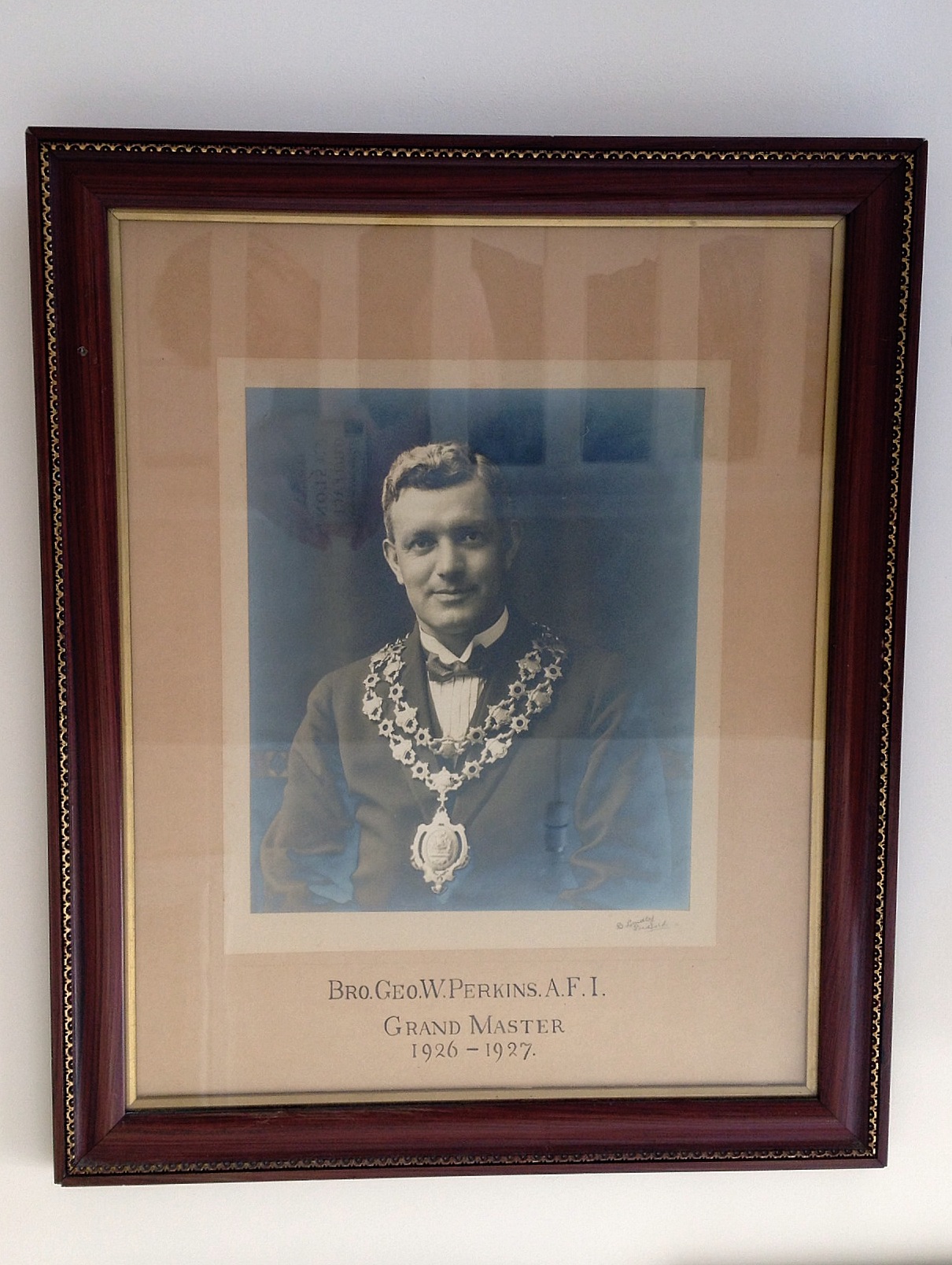
My great-grandfather, who hung through my childhood at the centre of a shrine tended by my great-aunt, now hangs in my house. After eighty-six years of exposure, his ghost is gently parting from the paper, which feels strange as, despite the chains of office, his cocked head and half grin suggest real warmth. His attitude’s too casual for a formal portrait, leaving me staring into the past, into the family version of La Giaconda, wondering about him as, by degrees, the relentless harshness of the day works at bereaving the family a second time. As a teenager, my defining memory of the Balkan war of the 1990s was of a refugee stuffing a hard drive into his rucksack, explaining to the camera that this contained everything, his whole life. Those fragile magnetic discs were a powerful metaphor for the atrocity. Family histories, unlike the official record, cannot depend upon multiple copies and archive quality acid-free paper. We will all eventually fade to white.
Nikola Madzirov’s Remnants of Another Age opens with the measured, elegiac After Us, where ‘One day someone will fold our blankets / and send them to the cleaners / to scrub the last grain of salt from them, / will open our letters and sort them out by date / instead of by how often they’ve been read. // One day someone will rearrange the room’s furniture / like chessmen at the start of a new game, / will open the old shoe box / where we hoard pajama-buttons, / not-quite-dead batteries and hunger.’ The repetition of ‘One day’ and the voicing of each sentence as a statement creates a sense of inevitability. The repetition of ‘One day’ also suggests the systematic way in which a life lived is wiped from the Earth. In the first stanza, physical traces are erased through the cleaning and the recycling of the blankets but, at a mental and emotional level, the fragile connections between memories, as represented by the letters, are irrevocably destroyed as a scholarly chronology is imposed. The same is true of the configuration of the furniture, and unyielding systems and methodologies march jack-booted over the most fragile memories.

When Someone Goes Away Everything That’s Been Done Comes Back develops this theme with a sobering telescoping of time, which contrasts with After Us’s formal structure. ‘One fourth of our waking hours / are spent in blinking. We forget / things even before we lose them – / the calligraphy notebook, for instance. / Nothing’s ever new. The bus / seat is always warm./ Last words are carried over / like oblique buckets to an ordinary summer fire. / The same will happen all over again tomorrow – / the face, before it vanishes from the photo, / will lose the wrinkles.’ The inclusive ‘we’ encourages us to recognize the irony of our situation: we are all lonely and forgetful together, and the image of the warm, empty bus seat adds an element of comfort – intimacy even – to the loss and loneliness.

However, in The Hands of the Clock, Madzirov questions these fragile links in the human chain, as you ‘Inherit your childhood / from the photo album.’ At one level, inherit means to become an heir, suggesting a warm, human succession of history and values. However, I’m left wondering about our family photograph album and whether certain vivid childhood memories are memories, or whether they have been implanted by the photographs we know. Inherited like this, the childhood that lives on in the adult memory is little more than the construct given to replicants in Philip K. Dick’s Do Androids Dream of Electric Sheep?
It’s worth noting that the poems in Remnants of Another Age are presented in facing translation, together with their Macedonian body doubles and, as a reader with no experience of the oral and written cultures of the region, I’m almost loath to read the translations too closely, searching for traces that aren’t there, and missing those that are. Despite these frailties in the reader, Madzirov’s poems sing from the page. Sometimes the voice is husky and intimate, and sometimes it wails and moans like the professional mourner, Madzirov’s grandmother, who, at the height of the Balkan horror, sometimes keened at the wrong grave. This makes more sense to me now, as the anonymous and freshly filled hole, like the warm bus seat, is a sign of where someone was only a fraction of a second ago, but the blink of the eye is a little act of forgetting.
Buy Nikola Madzirov’s Remnants of Another Age from Bloodaxe Books via Amazon.
RELATED LINKS

Ann Summers had nothing on our neighbour’s washing line. All the usual flimsy suspects were pegged up flaccid in a breezeless criminal line-up, a celestial conjunction of lingerie that betokened a professional intent. ‘She’s a prostitute,’ whispered my wife. Admittedly, she drove an Audi TT but, beyond the front door, in our naff mews of cheap town houses, was a kids’ playground and a panoply of stay at home mums. The pursuit of the oldest profession here was, surely, impossible? Yet the regular lugging of heavy camera equipment into a small suburban address and the chattering of the neighbours said that she was indeed a prostitute. However, the police were only ever called by her – when our feckless friends parked in front of her garage.

In The pair of scissors that could cut anything, Luke Samuel Yates’s vision of suburbia is at one both hilarious and hellish. In the opening poem, An Impeccable Risotto, Yates’s sentences unfold with unsettling comic timing: ”Don’t go out on a night like this alone’ / she begged him in her pants, / the giant spotlights / they’d installed that summer / casting dramatic shadows / under her eyes and breasts’. Like a striptease, details of undress and physicality are revealed by degrees, making the reader wonder who would opt to brave the dark alone in the face of such enticements. There’s something odd about the giant spotlights too. A security light throws its beam far and wide, whereas a spotlight’s beam is narrow and intense, suggesting narcissism. It’s human nature to twitch the net curtains when the neighbours aren’t looking, so perhaps it’s honest to light the decking like a theatre and have done with it. In the second stanza, we learn that ‘they were nervous that the pyromaniacs / who had done for the east side of the conifer hedge / three weeks last Sunday might have returned / to the scene of the crime.’ Yates’ sentence construction is glorious, as the ‘east side’ reference conjures up Los Angeles’ gang culture, or the murders of The Notorious B.I.G. and 2Pac Shakur before the ‘conifer hedge’ pops the bubble with its comic comparison. That the pyromaniacs did for the hedge ‘three weeks last Sunday’ evokes the obsessive, impotent anger of suburban hell. Nothing is said, but everything is observed and counted. Yates speaks of straitened times, and negative equity, as the couple are trapped: ‘Peter lost his job / because there was a recession / caused by nonchalance / and the trees dropped their leaves, seemingly outraged.’ Recession or not, the active verb ‘lost’ makes Peter feel judged (we know it was his fault) and the concealed indifference of the trees speaks of the street’s silent judgement.

In Exit, Yates’ gaze travels towards the metropolitan vortex and ‘The room is empty apart from the plants, the people and all of the furniture.’ Again, Yates’ trademark exploitation of the drama of the sentence comments on the ethics of a place of business that places the rhetorical weight on the furniture, and not on the people. An exit, one would assume, would offer an escape from this dystopia but, instead, ‘The tube station’s a plug hole at this time of day, / whisking people down and in and around (they cling / to their oars in their own extended metaphors), / tossing others out in a rolling boil of momentum and newspapers // into the grid of the city / and the grind of its engine’. The stanza evokes Eliot’s ‘The Waste Land’, as the city’s human effluent evokes the commuters on London Bridge, ‘so many, / I had not thought death had undone so many.’ The alliteration and consonance of grid and grind render the city’s angles and lines merciless.
In The pair of scissors that could cut anything, Luke Samuel Yates offers us a cold, disturbing vision of suburbia in the grip of recession and acutely conscious of possessions and property. After a couple of poems, you realise that apparently banal sentences unfold with limitless, surreal possibilities, and it’s this that captures the nation’s bland, beige housing estates so well. If you twitch those net curtains, then you have to be prepared to see anything.
Buy The pair of scissors that could cut anything from The Rialto.

The Poetry Trust’s Aldeburgh Poetry Festival Blog has updated with a close reading of Robert Wrigley’s Soundings, and you can find the poem printed in full there too.
RELATED LINKS
As we stood filling the ashtray, a whey-faced seminarian dispensed advice about the forthcoming term at Rome’s Gregorian University. I forget the lecturer’s name, but he’d made quite an impression on my friend, who struggled through the laughter as he related how this nutty priest regarded dance (dance!) as the highest form of expression. As the kind of young man who preferred a Marlboro to a mazurka, I was inclined to agree, but there I was, staring down the barrel of celibacy, with my mind and body set against one another, secure in the knowledge that, when it came down to it, the confessional was going to side with the catechism’s chilly dogma, and not with my breathing, pulsing flesh. These days, terrible a dancer as I am, I’m inclined to side with that nutty priest: how marvellous to see mind and body as one, whirling elementally, transcending language. Cogito ergo sum? I think not.
 The Defiant Ones (1958), dir. Stanley Kramer, starring Tony Curtis and Sidney Poitier (Photo credit: movingimagesource.us)
In the poem, Mind-Body Problem, Katha Pollitt offers us an ironic subversion of Descartes: ‘When I think of my youth I feel sorry not for myself / but for my body. It was so direct / and simple, so rational in its desires, / wanting to be touched the way an otter / loves water.’ Even now, the speaker is unable to reconcile the two, and the word ‘myself,’ shoved to the end of the line, sits all alone and contemplating space, while the body, irreconcilably banished, sits on the next line like a child on the naughty step. It was the body, we learn, that was ‘so rational in its desires,’ which subverts our usual attitude to what we see as rational within us. Pollitt’s poem sees the petty tyranny of this, as the body is patronised by ‘an ambitious / English-professor husband ashamed of his wife – / her love of sad movies, her budget casseroles / and regional vowels.’ The poem momentarily lifts us with an image of solidarity: ‘Tony Curtis / and Sidney Poitier fleeing handcuffed together,’ but our minds are only heading in one direction, and they’re not in the driving seat, as ‘I find I am being reluctantly / dragged along by my body as though by some / swift and powerful dog.’ Pollitt keeps herself on the tightrope, as her poem is at once cruel, funny, ridiculous – tragic.

Aere Perennius, with its list of small people and their small lives, evokes W.H. Auden‘s The Fall of Rome, as we meet ‘The mugger leaping out with his quick knife, / the waitress who does porno on the side, even the stray dog, methodically marking // the acidulated saplings one by one.’ The mugger and waitress are little more than items in a list, highlighting their utter inconsequentiality. There’s a sense of futility to it all too, as ‘Clouds give birth to themselves in the windy sky’ in an endless cycle in which everything and nothing changes and our desperation to matter achieves nothing but the most horrific of excesses. Suddenly Pollitt’s title, a borrowing from Horace’s third book of odes, slides into its ironic position: a monument more lasting than bronze.

This ability to switch between times and places makes Pollitt feel like a Modernist of the old school, and the results are memorable. Take Night Subway, which closes the first part of the collection. It evokes Ezra Pound’s In a Station of the Metro, where the surge of metropolitan humanity amounts to little more than petals, nothing more physical, or lasting, than an apparition. Again, Pollitt utilizes a list, populating the crowded carriage: ‘The nurse coming off her shift at the psychiatric ward / nodding over the Post, her surprisingly delicate legs / shining darkly through the white hospital stockings, / and the Puerto Rican teens, nuzzling, excited / after heavy dates in Times Square, the girl with green hair, / the Hasid from the camera store, who mumbles / over his prayerbook the nameless name of God.’ The voyeuristic details rehearse our fascination with, and wonder at, humanity, as our eyes flit between advertisements for travel insurance and those ‘surprisingly delicate legs’ in a feigned display of disinterest. Pollitt’s stanza break is positively Stygian, as we tunnel deeper into the darkness: ‘How not think of Xerxes, how he reviewed his troops / and wept,’ and, as Pollitt pulls the rug of time from under our feet, the scale of our smallness, measured against the index of Xerxes’ deceased greatness, reminds us of how little we are.

The collection’s central section, After the Bible, offers topsy-turvy reworkings of key moments from the Old and the New Testaments. Martha’s rhetorical indignation cuts to the heart of The Mind-Body Problem: ‘Well, did he think the food would cook itself? / Naturally, he preferred the sexy one, / the one who leaned forward with velvet eyes and asked // clever questions that showed she’d done the reading.’ There’s an extra layer of irony here as, reading from Luke chapter 10, this episode in the home of Mary and Martha follows hot on the heels of the miracle of the feeding of the five thousand in chapter 9, and we wonder whether to interpret Martha’s first comment as ignorance, or sarcasm. Either way, the mind-body problem is less cut and dried than it first appeared, as the marginalized Martha sees the power of Mary’s ‘velvet eyes’ all too clearly and the adjective ‘velvet’ keeps physical sensation pleasurable, while the reading casts Jesus’ relationship with the doe-eyed Mary as something from a campus drama.
In The Mind-Body Problem, Katha Pollitt offers her readers a meaty, metaphysical experience and, like Donne and Auden, life and love are never more than a heartbeat from tragedy. Pollitt shys away from nothing here, but she handles her material with care, and sees life’s light and humour, as well as the darkness.
Buy The Mind-Body Problem from Seren Books
LINKS

When I admit to reading almost nothing in translation, people are unimpressed, and I admit it: they have a good point. It’s just that I feel uncomfortable about the presence of a shadowy intermediary between me and the text’s first writer. The words on the page matter: the writer wouldn’t have put them there if they didn’t, and how can the translator communicate cultural values and idiom? So, most of the time, I’m happy to stumble through parallel translations in languages I can handle, but my reading is tragically, shamefully Anglocentric. I recognise how this impoverishes me as a reader and, more importantly, as a world citizen, but I just don’t like jumping into the bath-water, once the translator’s had the bubbles.

So, Shazea Quraishi’s The Courtesans Reply was quite a gift. Her inspiration is drawn from Sanskrit dramatic monologues, bhana, and the Kāma-Sūtra, and the title of her opening poem, The Sixty-Four Arts, transports us from a culture in which prostitution and criminality make easy bedfellows, to a place where the courtesan might be skilled, cultured and powerful. Quraishi’s list of accomplishments unfolds carefully, and the initial ‘music, dancing, acting, singing,’ invite us to view the courtesan as a sexed-up character from Austen or Eliot. However, her list continues: ‘conjuring, / sleight of hand, / logic, cooking, sorcery, fencing / with sword and staff, / archery, gymnastics, carpentry, / chemistry, architecture.’ On any terms, this is a surprising, remarkable list, and we’re left wondering how to view these skills: are they on a par, or ranked? Conjuring and sleight of hand feel like related disciples, so perhaps cooking should also be seen as a precise alchemical art, worthy of consideration as a science (as Heston Blumenthal would have it). The opening poem’s pseudo-status as a page from a courtesy book makes Quaraishi’s collection feel like a deliciously puzzling historical artefact, or a Borges short story.

However, Quraishi’s next poem, Tambulasena, invites associations with the Sanskrit drama, Padmaprabhrotakam, in which the courtesan’s body is security tagged with a bindi, breasts coated in tamper proof sandal paste to alert her master to the attentions of her lover: ‘In the beginning / my whole body was covered with skin / hard as a rock. Then he came // and his mouth / running over me was a river, cool and quick, / with small silver fish.’ Quraishi’s opening line and phrase occupies an almost Biblical space, suggesting that there was nothing before this beginning so, knowing the story from the Padmaprabhrotakam suggests that the young Tambulasena knew nothing before life as a courtesan. She calls her sandalwood carapace ‘skin’, and the line break invites us to fall into the trap of viewing it this way too, but no skin is ‘hard as a rock.’ For me, anyway, a chilling contemporary note is injected into the poem here: just how young was this girl when she became a courtesan? Trading records show that girls were bought in Greece to work in India. Quraishi presents the lover as ‘a river, cool and quick,’ subverting the usual gender shorthand of adamantine maleness and slippery, engulfing femininity, making us wonder about the balance of power here. In fact, in the poem’s second part, the active verbs belong to Tambulasena: ‘I bathe’, ‘I bend’, ‘I let him,’ and are reminiscent of the heartbreaker in John Keats’ La Belle Dame Sans Merci.

In Vanarajika, Quraishi continues to explore the issue of ownership, as the young courtesan says: ‘Using the nail on my middle finger / I mark his neck / with a half moon, on the place / I like best / to kiss.’ The speaker’s language is precise, and the passion is in the physical gesture, not in the language. This endows the poem with an erotic immediacy that purple prose just can’t manage. The syntax of the sentence, following the physical act and ending on a kiss, puts bodies, and not minds, in control. The first three stanzas invite us to suppose that the courtesan calls the shots, but the balance of power shifts, and his marks hint at underlying violence and control: ‘Lightly, he touches my cheek / giving me gooseflesh, / then marks me with his thumb, / deepening the scratch with the other fingers. / A knife stroke.’ The final line, a jabbing little fragment, smarts on the page, and what are we to make of the ‘stroke,’ with its twin connotations of pleasure and pain?

In the final poem, Anangadatta, Quraishi revoices a character from the Ubhayabhisarika, who, unlike the majority of her profession, falls for a penniless young man instead of holding out for wealth and influence. Quraishi creates these simple dreams through the list-like structure of her first stanza: ‘The peaceful routine of household chores: / sweeping the floors of the house, / sprinkling water on the yellow earth outside the door.’ Looking back at The Sixty-Four Arts, it is telling that Anangadatta’s desires, the simple, fundamental human rites of passage, are not on the list.
In The Courtesans Reply, the voices of Quraishi’s young courtesans create a restless, political, erotic presentation of relationships and, while the collection chooses to keep us guessing about who’s on top, it also delights us with its restrained presentation of excess.
Buy The Courtesans Reply direct from Shazea Quraishi
LINKS

I eventually looked through the bedroom window, towards the source of the noise, and a ghost, street lit in Thames water, stared back. The thrashing in the river suddenly made sense: the teenage boy had leapt from the road bridge, and had been in the water a while. It was two in the morning on a sharp February night. My girlfriend stayed in the bedroom with the phone while I pulled him aboard, stood him by the stove, and stripped him. Minutes later, as he dried off and dressed in my clothes, I declined to hide his drugs as the police clambered aboard. He’d been fleeing from a gang, and a dive into the darkness over the side of a bridge had seemed the safest option. Minutes later, he was on his way. Never mind that he was under eighteen, or that he’d spent a fair while in a freezing, filthy river. For a few days afterwards, I wondered whether I’d see a grateful parent, dragging a contrite teenager in tow. My clothes, washed and ironed, would be returned, together with a bottle. No. I never saw the boy, or my clothes, again. He’d never even said thank you.

In Walney Channel, Kim Moore presents the channel as an ebb and flow: a breath. ‘There’s a door frame in the channel, / made of thin black twisted wood. // When the tide is in, it leads to water. When the tide is out, it leads to mud // and the beginning of the old road / across the channel. Listen at dusk // for the shouts of those who walked / that channel years ago.’ Like the door frame, the awkward consonants of ‘thin black twisted’ disrupt the scene and Moore’s couplet sits in space, as the door frame sits in the mud. In the second stanza, the repeated caesuras echo the ebb and flow of the tide, the cyclic transition of the Earth’s changing state from water to mud, a magical, unstable hinterland between things. As the tide ebbs, Barrow Island’s shipbuilding past is revealed in the exposed crossing, ‘like the spine of some forgotten animal, / turning in its sleep.’ That the crossing is a ‘spine’ reveals its crucial importance: it’s a support for the whole nervous system of the area, and the animal is not extinct, its is ‘forgotten,’ suggesting the persistence of memory and the spirit of a place. On a first reading, this causeway, alive with ghostly noise, felt gothic in a The Woman in Black sort of way, but that’s not it. Yes, the noises of the past can be heard but ‘Don’t stop, and if you hear them // calling, don’t turn around.’ This is closer to the myth of Orpheus and Eurydice than Susan Hill’s horror, and we’re left wondering about the wisdom of dwelling on the memory of an industrial past.

However, in a poem like The Ferryman, Moore presents humanity as hopelessly out of touch with the true nature of things: ‘They were waiting on the shore, / some with mobiles in their hands, / the words they thought / they’d have a chance to say / sitting round and smooth like stones inside their mouths, // some on their hands and knees, / feeling for spectacles, eyes tight / against the sun, not realising / the dark had gone, and some sit on chair-shaped rocks, / as if they can still feel the shunt // of the tube.’ Here, Moore offers us an exquisitely ironic reimagining of Canto III of Dante’s Inferno. Where Dante presents us with the anguish of the damned, Moore’s damned are still too engrossed in their smartphones to really notice the situation. Nevertheless, the repetition of ‘some’, a Classical rhetorical device, adds an underlying solemnity to the situation before the absurdity of our health and safety culture is exposed, as Charon ‘holds up / his hand for them to stop / but being without a tongue / he cannot explain the boat / was only built for twelve.’

Shipbuilding haunts the collection and, if the ludicrousness of the modern is presented in a poem like The Ferryman, then the collection’s structure twists this note. Wallace Hartley was the Titanic’s bandmaster, ‘And when he was found, still in his uniform, / his violin strapped to his back, people began / to remember the way he’d played each night, / not just the last, the dip and turn of his shoulders / as he led the orchestra through a waltz, the way the ship was all lit up and smiling / like a brand new town, those nights before / the boats were counted.’ Pulled from the freezing Atlantic, ‘still in his uniform,’ Moore suggests not only Hartley’s unswerving sense of vocation, but also his stillness – silenced, at peace, frozen even. And ‘people began / to remember the way he’d played,’ and Hartley is recast as Orpheus, an enchanter, leading us deep into an underworld where ‘the ship was immense and black.’
Kim Moore’s If We Could Speak Like Wolves offers us the haunting, barren, shape-shifting landscape of the estuary, a landscape as bewildering as any fairytale forest and requires us to ask unsettling questions about ourselves, challenging any easy escapes into a fantasy of nostalgia.
Buy If We Could Speak Like Wolves from The Poetry Business
RELATED LINKS
Regular readers will know that I try to avoid dishing out other people’s poems in full. Doing that would hardly help poets sell more books, and I’m all for that.
However, as Aldeburgh Festival Blogger, I will be offering close readings of poems by a few of the festival poets, and these poems will be printed on The Poetry Trust’s website, so it’s all legit and above board.
My first outing’s with D. Nurkse’s The Past. It fair blew me away and, if you’re interested, you can read it, together with a few of my thoughts on it here: The Poetry Trust: Festival Blog.

On clearing my great aunt’s house, my parents presented me with her ACME Thunderer. She was a teacher from the old school, and I can imagine her, the stillness in the playground’s white-painted centre circle, as demented little tots bounced off of one another in a wheeling, shrieking mass. Her lips purse and her hand raises the whistle to her lips to call an end to playtime. Once a glossy silver, the whistle’s surface is now dulled and matt but, when I blow it, I am that young woman in my mind’s eye, and the playground noise hums about me.

In Richie McCaffery’s hands, the past sings and buzzes with joy, pain and regret. In Dedication, the second poem in his pamphlet, Spinning Plates, the first two stanzas read: ‘In an underground copy / of Lady Chatterley’s Lover / a shaky plum inscription: / ‘To Renee, my sweet – / from France via the Dunkirk / holocaust, 2/8/40, Sid.” McCaffery’s language is stripped and reads like notes, as his first stanza is missing a main verb. Smuggling this particular banned book is a youthful, erotic gesture which flies in the face of a time of trouble but, with the ‘shaky’ inscription, McCaffery sours the mood. Its shakiness leaves us wondering about the effects of Operation Dynamo, which was completed on the 3rd of June, two months before Sid penned his words. ‘Holocaust’ indicates how quickly words can change their meanings as, in 1940, Sid could have had no idea of how The Second World War was going to change humanity’s understanding of this word (Auschwitz started its attempted genocide of the Jewish people in May that year). Ultimately, however, this is a romantic poem: Sid’s written dedication, coupled with the physical dedication he showed by transporting the novel through water which may have well lapped at his shoulders, sounds like a knightly quest, and so McCaffery’s stark poem leaves us with an Imagist moment of fragile, terrible beauty: ‘Bullets hitting the water / like kingfishers.’

The impact of The Second World War recurs throughout the pamphlet. In Rust, we read that, ‘In the dunes at Warkworth beach, / wartime barbed wire corrodes / in marram grass, coiled like cilices.’ The first line keeps the secret but, in line two, the wire is almost cancerous, as it corrodes. ‘Corrodes what?’ we might wonder. However, in the final line of the tercet, we discover that it corrodes itself and that its location, ‘in marram grass,’ makes it finally feel like a part of the landscape. ‘Cilices’ derives from Cilician goat hair, giving us the original penitential hair shirt, making us wonder whether reconciliation and absolution have now been achieved.

Women, and especially mothers, haunt the collection and so, in a poem like Flotsam, where ‘They found her faux-leather handbag first / with the usual tidal stuff, shore-froth, pincers, / bits of broken shells, ragworm casings’, McCaffery invites us to wonder about the relationship between the various materials washed up on the beach. We’re reminded of Rust’s World War, but this is more intimate. The first stanza implicitly denigrates the woman: her handbag’s a fake and the second line’s ‘with’ and ‘stuff’ make it sound like the usual flotsam. However, the second stanza examines the bag’s contents, which McCaffery presents as a series of omissions: ‘It didn’t contain the tools of her trade: / clot-red lippy, war-paint, a Stanley knife, / French-ticklers, a skint wallet of old plastics’. The Stanley knife suggests defence against an altogether more domestic form of violence, yet McCaffery’s final line, ‘the tide was turning, they needed the boat,’ reminds us that we have been pulling bodies out of the water long before Dunkirk, long before 1940, and many of these were women: casualties of aggression and desire.

The pamphlet’s penultimate poem, Police Whistle, unites the collection beautifully. ‘In a drawer of his old ties / I find it, squat and silver – / my grandfather’s police whistle. // I blow it so loud and urgent / that even he hears in the dark / […] a breaking of wax seals / and questing of blood hounds’. Beneath McCaffery’s understated surfaces, and beyond his troubling, evasive endings, lies a deep-rooted desire for revelation, judgement and justice.